Best Wire Strippers for Electricians: Klein vs Knipex Comparison

Klein 1010 Wire Strippers
$15-25
The reliable, affordable standard that gets the job done
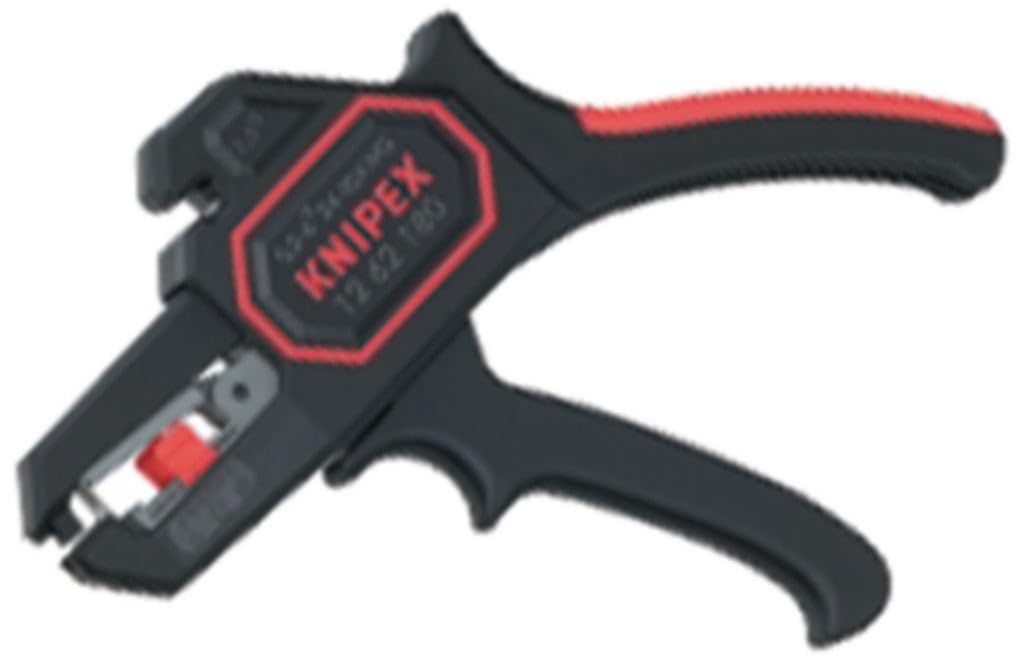
Knipex 1380200 Automatic Wire Stripper
$48-60
Premium auto-stripper for high-volume work and repetitive stripping
Wire Strippers: Klein 1010 vs Knipex Auto-Stripper
Wire strippers are personal. What works for your hand, your job flow, and your budget matters more than what the internet says is “best.” That’s why the right answer is often between the Klein 1010 and the Knipex automatic stripper—and the choice depends on how much you’re stripping.
The Klein 1010: The Reliable Classic
The Klein 1010 is what most electricians in the field own. At $15-25, you can own three pairs and still spend less than one Knipex. The design is traditional: two handles, a cutting chamber, and adjustable gauge settings for wire diameter. The cutting wheel is replaceable, so when it dulls after months of heavy use, you buy a replacement wheel, not a new stripper.
In practice, the Klein 1010 works. The jaw design is durable—it survives being dropped, thrown in a toolbelt, and abused. The adjustment mechanism is intuitive, and once you dial it in for your preferred wire gauge, it stays consistent. For 12AWG and 14AWG residential work, you develop a rhythm: set, squeeze, pull. Three seconds per wire. If you’re doing new construction or rough-in runs, you’ll strip dozens of wires a day, and the Klein doesn’t fatigue your hand.
The honest drawbacks: the stripping motion requires intentional hand pressure and technique. If you’re doing ultra-fine gauge work or precision stripping for delicate connections, the margin for error is wider than with automatic tools. The adjustable collar can slip if you’re not careful, leading to inconsistent stripping on back-to-back wires. For apprentices, there’s a learning curve—getting the pressure and angle right takes practice.
Who should buy the Klein 1010: Residential electricians doing service work, maintenance, or standard new construction. If you’re replacing outlets, running circuits, and doing repair work, the Klein 1010 is sufficient and economical. Budget-conscious shops that equip multiple techs should buy these. Apprentices should learn on them because the manual control teaches proper technique. If you’re not stripping hundreds of wires per day, this is your tool.
The Knipex Automatic Stripper: The High-Volume Solution
The Knipex 1380200 is a different category. At $48-60, you’re paying for automation. You insert the wire, close the handles, and the automatic mechanism grips, rotates, and pulls the insulation off in one smooth action. Set it once and let muscle memory take over. On high-volume jobs—when you’re running 50+ circuits in a day—the Knipex saves your hand and increases consistency.
The real advantage shows up on repetitive work. The automatic action means you’re not varying hand pressure, angle, or technique from wire to wire. Strip 100 wires with a Knipex and every one has the same amount of exposed copper. Strip 100 with a Klein and you’ll have variation based on your grip and fatigue. For panel work, conduit runs, or renovation jobs with dense wire bundles, that consistency matters.
The Knipex design is German precision. The cutting wheels are high-quality, and the adjustment mechanism is positive and stays locked. The grip texture keeps your hand from sliding even when it’s sweaty. The tool feels substantial, like it was built to last 10 years, not 2. For electricians running their own shops or managing crews, the durability and consistency justifies the cost over three years of heavy use.
The honest drawback: it’s overkill for light duty. If you’re doing occasional repairs or maintenance, you’re paying for capacity you won’t use. The automatic mechanism, while reliable, adds complexity—there’s more to clean and maintain. Knipex is German tooling, so replacement parts take longer than swapping a Klein wheel.
Who should buy the Knipex: High-volume operators, crews running new construction, electricians who strip 100+ wires daily. If you’re managing your labor cost and hand fatigue matters to your bottom line, the Knipex pays for itself in one month of full-time use. Experienced electricians who know their workflow and want the best tool for repetitive work should invest here.
The Honest Take
For most electricians, the Klein 1010 is the right answer. It’s adequate, durable, and not a financial risk. For specialists and high-volume shops, the Knipex automatic is the professional’s choice. Many electricians own both—Klein in their pocket for quick jobs, Knipex in the truck for construction runs.
Affiliate Disclosure
This site uses affiliate links. We earn a small commission if you purchase through the links above. We recommend both the Klein 1010 and Knipex based on actual field use and honest cost-benefit analysis. Neither tool fails; one is better for high-volume work, one for versatility and value.